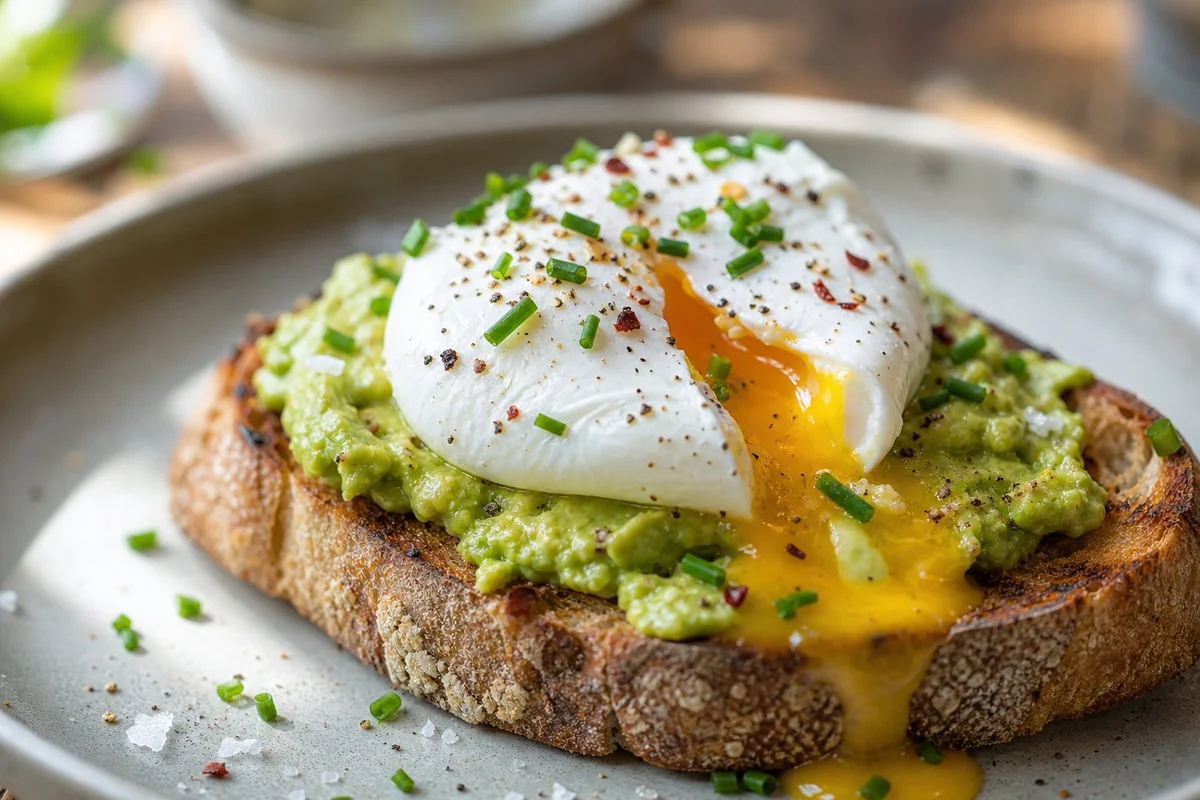
Great avocado toast hinges on contrast: sturdy sourdough toasted dark enough to crunch audibly beneath your fork, cool green Hass avocado mashed coarse rather than pureed flat, bright fresh lemon juice cutting through rich fruit fat, and a warm poached egg whose golden yolk spills across the valleys like built-in sauce. Yet home cooks often skip poaching on busy mornings because boiling water turns whites into ragged feathers or rubbery pucks. Skip the dramatic spoon-vortex trick altogether. Ten quiet seconds draining each cracked egg in a fine-mesh tea strainer removes the loose, watery outer white that causes messy wisps, letting you poach two neat, pillowy eggs simultaneously in calm, barely trembling water while your thick country bread turns crisp and golden.
Why This Recipe Works
Every egg contains two distinct layers of albumen: a thick, viscous inner white hugging the yolk, and a thin, watery outer white that spreads as an egg ages in the carton. When dropped into hot water, that thin outer white detaches immediately and floats to the top as foam. Draining each raw egg briefly in a fine-mesh sieve removes only the watery fraction, leaving a compact orb that sets into a smooth, café-neat oval every single time.
Equally important is assembling textures in the right sequence. Rubbing warm toasted sourdough lightly with olive oil—or letting the toast cool for 60 seconds on a wire rack rather than flat on a cold plate—keeps trapped steam from softening the bottom crust before you sit down to eat. Mashing Hass avocado directly in a bowl with fresh lemon juice and flaky salt creates craggy peaks and pockets that catch molten egg yolk far better than smooth guacamole.
Key Kitchen Tips for Café-Quality Results
- Pick ripe Hass avocados by the stem test: Gently press near the narrow top stem rather than bruising the middle; it should yield like cold butter without feeling hollow or mushy.
- Keep poaching water at a bare shiver (185°F to 195°F / 85°C to 90°C): Look for tiny champagne bubbles clinging to the bottom of the saucepan with wisps of steam rising—never a rolling boil, which batters delicate whites apart.
- Blot poached eggs on a dry towel for 5 seconds: Lifting a wet egg straight from the pot onto toast drips poaching water into your bread and turns crisp sourdough soggy.
- Slice bread a full 1/2 inch to 3/4 inch (1.5 cm) thick: Thin sandwich bread buckles under generous toppings.
Common Mistakes to Avoid
- Using too much vinegar in poaching water: One teaspoon of distilled white vinegar per quart of water gently lowers pH to speed protein coagulation; two tablespoons leaves a pickled taste on the egg.
- Salting avocado half an hour early: Salt draws moisture out of ripe avocado flesh and dulls its vibrant emerald color. Mash and season right while the eggs poach.
- Cracking eggs directly from shell into hot water: Slipping each strained egg from a small ramekin right at the water line prevents yolk breakage and uneven tails.

Ingredients
- 2 thick slices (110 g total) artisan sourdough or whole-grain country bread, cut 1/2 to 3/4 inch thick
- 2 large fresh eggs (100 g out of shell), cold from the refrigerator
- 1 teaspoon (5 ml) distilled white vinegar or apple cider vinegar (for poaching water)
- 1 medium-large ripe Hass avocado (150 g peeled, pitted flesh)
- 1.5 teaspoons (7.5 ml) freshly squeezed lemon juice
- 1 teaspoon (5 ml) extra-virgin olive oil, for drizzling
- 1/4 teaspoon (1.5 g) flaky sea salt (such as Maldon), plus a pinch for mash
- 1/8 teaspoon (0.3 g) freshly cracked black pepper
- Pinch of crushed red pepper flakes (optional)
- 1 tablespoon (3 g) finely snipped fresh chives or flat-leaf parsley
Ingredient Notes & Tested Substitutions
- Bread Options: Sprouted whole-grain bread, seeded rye, or sturdy gluten-free sourdough loaves all hold up well when toasted deeply golden.
- Citrus Swap: Fresh lime juice works nicely in place of lemon juice if pairing with cilantro instead of chives, though lemon highlights the buttery sweetness of poached egg yolk best.
- No Vinegar on Hand? Straining the egg in a fine-mesh sieve still produces a clean poached egg in plain water; vinegar simply helps the outer skin set a few seconds faster.
- Soft-Boiled Alternative: Prefer peeling over poaching? Lower cold eggs into gently boiling water for exactly 6.5 minutes, chill in ice water for 60 seconds, peel, and halve onto the avocado.
Step-by-Step Instructions
- Bring poaching water to a gentle quiver (4 minutes): Fill a wide 3-quart saucepan with 3 inches (7.5 cm) of water and bring just to a simmer over medium-high heat. Once small bubbles rise, reduce heat to low so the surface barely trembles (185°F to 195°F / 85°C to 90°C) and stir in the 1 teaspoon white vinegar.
- Strain each egg into ramekins (1 minute): Crack one cold egg into a fine-mesh tea strainer set over a small bowl. Let the watery liquid white drip through for 10 seconds, then gently tip the intact egg into a small ramekin or espresso cup. Repeat with the second egg into a second cup.
- Poach the eggs calmly (3 to 4 minutes): Lower the lip of each ramekin right to the water’s surface and slide the eggs in on opposite sides of the pot. Set a timer for 3 minutes (up to 3.5 minutes for slightly firmer whites) without stirring. Meanwhile, pop the sourdough slices into your toaster until deeply golden brown, then rest them briefly on a wire rack so the undersides stay crisp.
- Smash and season the avocado (2 minutes): Scoop the ripe avocado flesh into a medium bowl with the fresh lemon juice and a small pinch of salt. Mash roughly with the tines of a fork—leaving plenty of small chunks for texture rather than whipping smooth.
- Drain eggs and assemble immediately (1 minute): Lift each poached egg out of the water with a slotted spoon—the white should feel plump and opaque while the center yields softly to a gentle touch. Rest the spoon on a clean dry kitchen towel for 5 seconds to wick away water. Spread the chunky lemon avocado across both warm toasts, nestle a poached egg on top, drizzle with olive oil, and finish with flaky sea salt, cracked pepper, red pepper flakes, and fresh chives.
Nutrition Estimate, Storage & Variations
Estimated Nutrition per Serving (1 loaded slice with 1 poached egg): 340 calories | 12 g protein | 28 g carbohydrates | 7 g dietary fiber | 1 g sugars | 21 g total fat (3.5 g saturated fat, 13 g heart-healthy monounsaturated fat) | 410 mg sodium. Heart-healthy monounsaturated fats from avocado help your body absorb fat-soluble vitamins A, D, E, and carotenoids locked inside the egg yolk.
Storage & Make-Ahead Poached Egg Trick
Assembled avocado toast should always be eaten immediately while the bread is crisp and the yolk is warm. However, you can poach eggs up to 2 days ahead! Transfer freshly poached eggs straight into a bowl of ice water to halt cooking, then store submerged in cold water in a sealed container in the fridge. To reheat in the morning, slip chilled poached eggs into a bowl of hot (not boiling) tap or kettle water (~150°F / 65°C) for 60 seconds while your bread toasts—the yolk warms right back up without overcooking.
Three Vibrant Topping Variations
- Everything Bagel & Pickled Red Onion: Swap red pepper flakes for 1/2 teaspoon homemade everything seasoning and tangles of quick-pickled red onion.
- Crisp Radish, Cucumber & Dill: Layer paper-thin watermelon radish slices and fresh dill fronds under the poached egg for peppery crunch.
- Blistered Cherry Tomato & Feta: Scatter 2 tablespoons crumbled sheep’s-milk feta and halved sweet cherry tomatoes around the egg.
Frequently Asked Questions
Should eggs be cold or room temperature for poaching?
Cold right out of the refrigerator! Unlike baking where room-temperature eggs emulsify better, cold egg whites hold tighter around the yolk when they hit warm poaching water, giving you a rounder shape.
Why did my poached egg yolk cook solid?
Either the water was boiling above 205°F (96°C) or the egg stayed in past 4 minutes. Keep the heat low enough that bubbles barely break the surface and pull large eggs right at the 3-minute to 3.5-minute mark.
How do I stop leftover half avocados from turning brown?
Leave the pit inside the unused half, brush the exposed green flesh lightly with lemon juice or olive oil to block oxygen, press a piece of reusable wrap directly against the surface, and refrigerate for up to 24 hours.
Can I poach 4 eggs at the same time for brunch?
Yes—use a wide 12-inch deep sauté pan filled with 2.5 inches of water rather than a narrow saucepan so the eggs have room to set without fusing together, working clockwise so you lift them out in the same order they went in.
Final Thoughts & More Recipes to Try
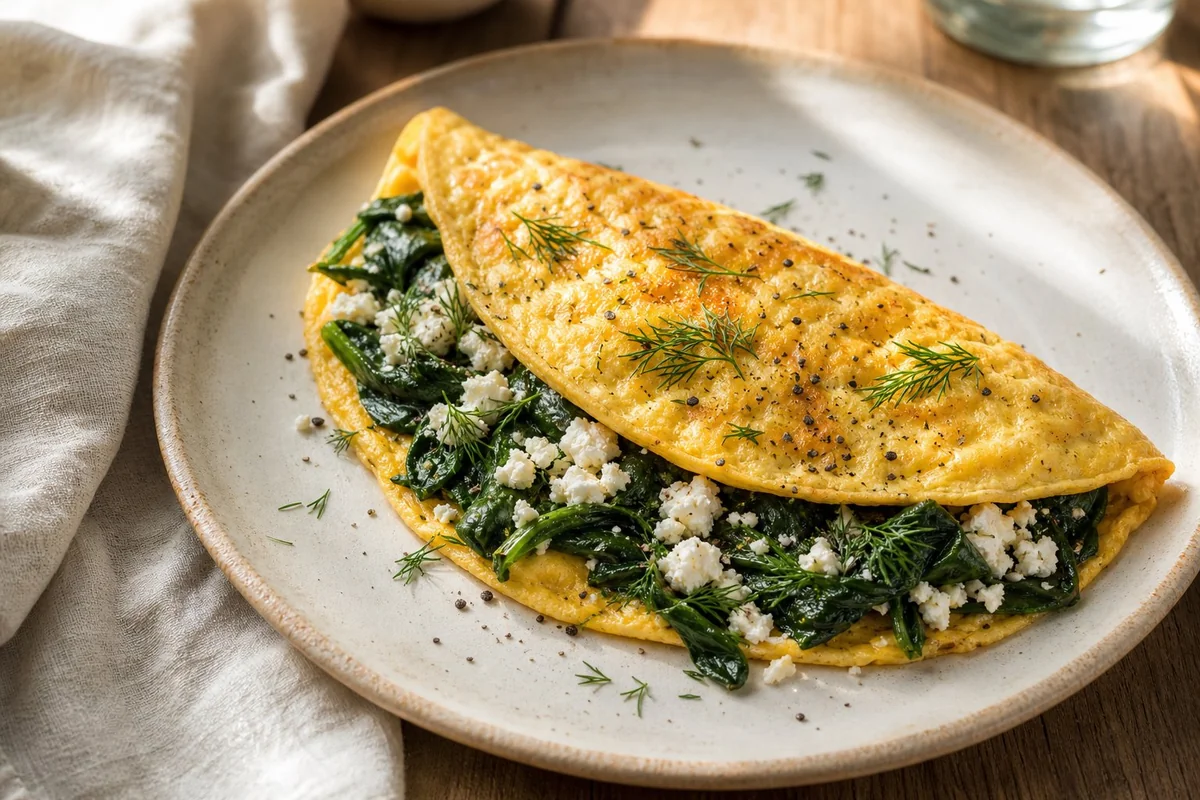
Once you try the 10-second fine-mesh strainer step, poaching eggs stops feeling fussy and becomes a calm, repeatable weekday habit. Looking for more fresh ways to enjoy avocados and eggs? Try our protein-packed Chicken Avocado Wrap or Tuna Stuffed Avocado for an effortless midday lunch, or fold baby greens into a five-minute skillet Spinach Feta Omelette.