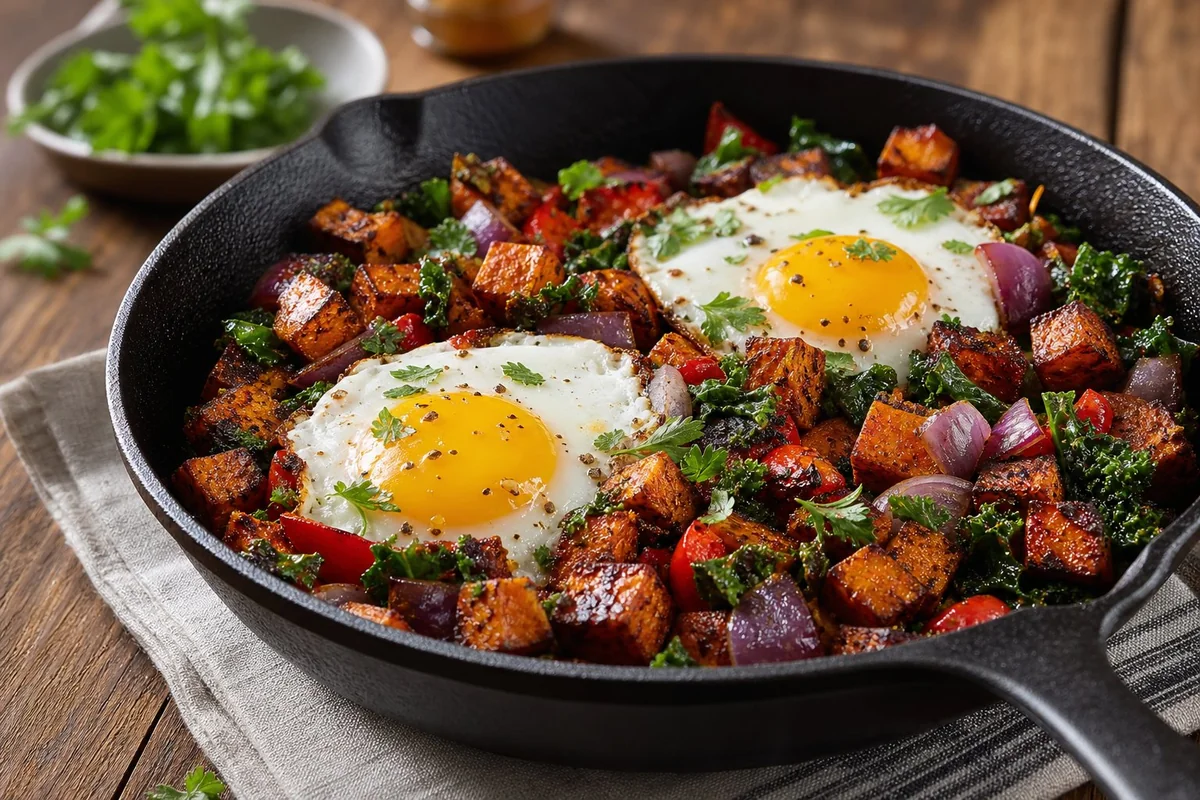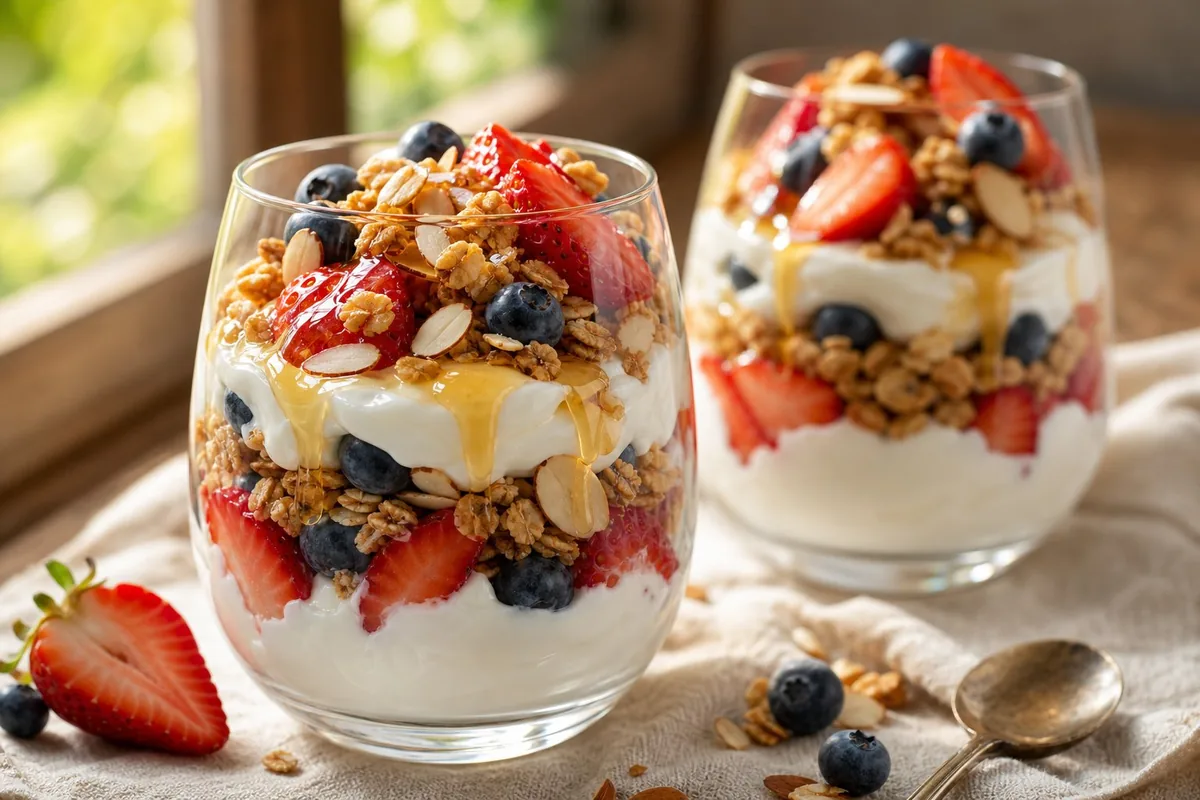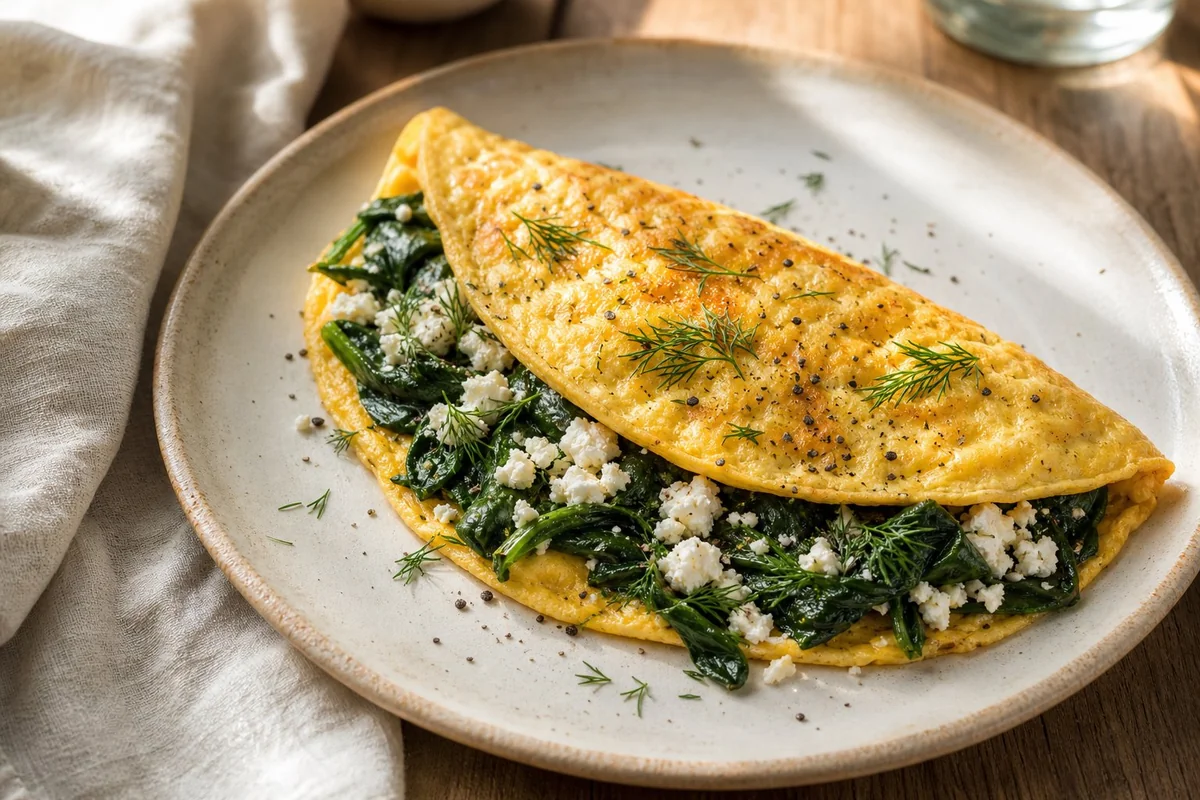
A great omelette does not demand culinary school wrist-flipping, yet it rewards two small moments of patience at the stove. Most rushed weekday omelettes suffer the same fate: raw spinach tossed into a screaming-hot pan releases green juice right as the eggs brown into tough, leathery sheets. Slow the burner down just a notch and wilt your greens with sliced scallion for sixty seconds first, and the whole experience shifts. Three whisked eggs hit warm foaming butter, set into ribbons of soft, glossy curds, and fold neatly around sweet wilted spinach, briny sheep’s-milk feta, and feathery dill. From cracking the first shell to sliding a warm, custardy half-moon onto your plate takes barely ten minutes and leaves only one small skillet in the sink.
Why This Recipe Works
Spinach leaves are roughly ninety-one percent water by weight. If you scatter raw leaves directly onto wet eggs in a skillet, cell walls burst mid-cook and dump moisture underneath the setting egg sheet, causing torn folds and a watery puddle on the plate. Wilting the spinach in a drop of olive oil first—and letting excess steam flash off in the pan before transferring it to a saucer—concentrates its earthy sweetness and keeps your omelette dry-bottomed and plush.
Salting the beaten eggs right before you start wilting the greens also plays a subtle chemical role. Dissolving salt into raw yolk and white five minutes ahead loosens tight egg proteins so they link more gently under heat, giving you a tender, creamy interior even if your pan runs slightly warm. Finally, folding block feta inside right as you take the skillet off the burner warms the cheese into creamy pockets without melting out harsh, salty oil.
Key Kitchen Tips for Silky Curds
- Match skillet width to egg count: An 8-inch (20 cm) nonstick or well-seasoned carbon-steel skillet is the sweet spot for three large eggs. A 10-inch pan spreads three eggs too thin, drying them out in seconds.
- Watch the butter foam to read pan temperature: Butter melts around 95°F, foams briskly around 250°F (120°C), and browns past 300°F. Pour your eggs in right as the foaming subsides—before the butter turns nut-brown.
- Buy block feta packed in brine: Pre-crumbled tubs are dusted with cellulose anti-caking starch that stays chalky when warmed; crumbling a slice off a brined block melts into velvety tang.
- Remove from heat while the top still gleams: Residual heat inside the folded omelette finishes setting the center on the way to the table.
Common Mistakes to Avoid
- Cooking over medium-high heat: Blistering heat blisters the bottom brown and spongy while leaving raw white sloshing on top. Medium-low heat gives you complete control.
- Overstuffing the fold: More than half a cup of cooked filling tears the delicate spine of a three-egg omelette when you fold it in half.
- Adding heavy salt on top of salty feta: A tiny 1/8 teaspoon pinch of sea salt seasons three eggs cleanly without clashing with briny cheese.
Ingredients
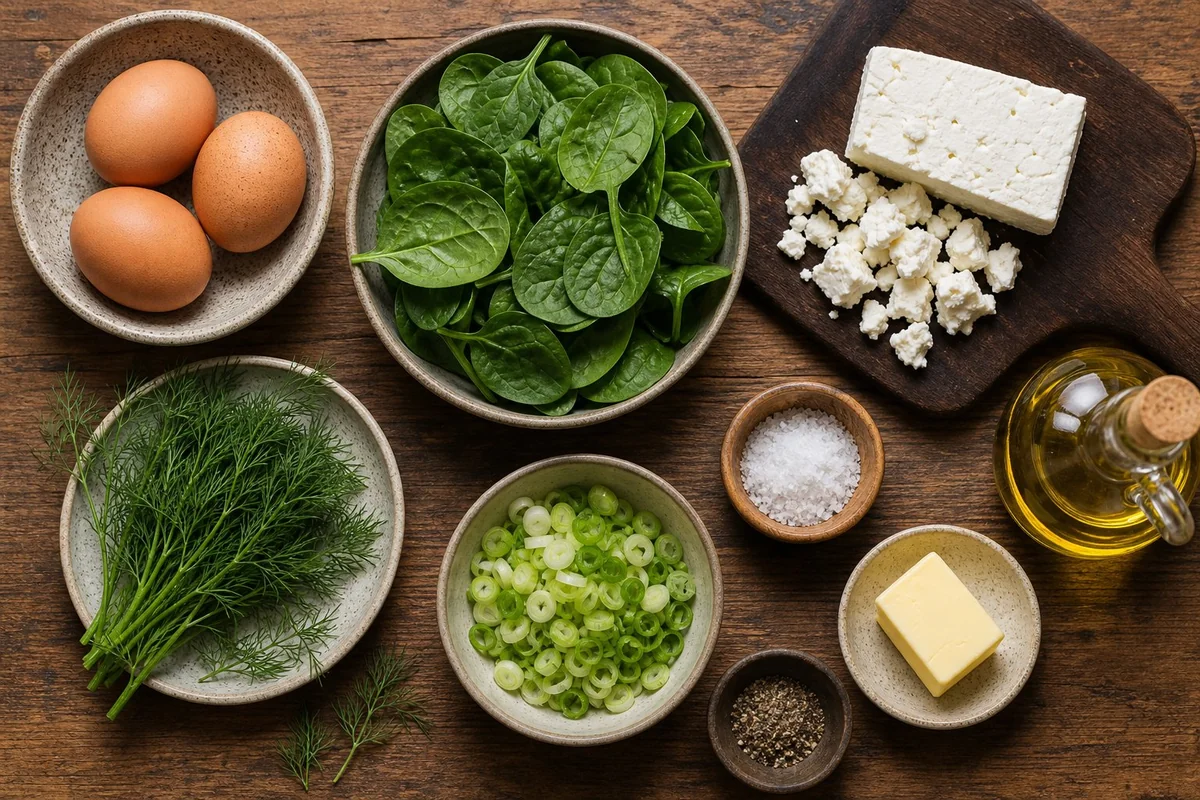
- 3 large eggs (150 g out of shell)
- 1 teaspoon (5 ml) water or milk (for lighter steam lift)
- 1/8 teaspoon (0.75 g) fine sea salt
- 1/8 teaspoon (0.3 g) freshly ground black pepper
- 1 teaspoon (5 ml) extra-virgin olive oil
- 1 medium scallion / green onion (15 g), thinly sliced
- 1.5 packed cups (45 g) fresh baby spinach
- 1.5 teaspoons (7 g) unsalted butter
- 1/4 cup (38 g) crumbled sheep’s-milk block feta cheese
- 1 teaspoon (1 g) finely chopped fresh dill or flat-leaf parsley, plus extra for garnish
Ingredient Notes & Tested Substitutions
- Butter-Free Option: Replace the unsalted butter with an extra 1.5 teaspoons of extra-virgin olive oil or avocado oil; olive oil pairs naturally with Greek-inspired greens and herbs.
- Cheese Swaps: Creamy goat cheese (chèvre), mild ricotta salata, or finely grated aged Kasseri all work beautifully in place of feta.
- Frozen Spinach Option: Thaw 1/3 cup frozen chopped spinach completely and squeeze it inside a clean kitchen towel until bone-dry before warming with the scallion.
- Herb Variations: Fresh mint leaves or oregano bring classic spanakopita aroma if you do not have fresh dill on hand.
Step-by-Step Instructions
- Whisk and season the eggs early (1.5 minutes): Crack the 3 large eggs into a medium bowl with the 1 teaspoon water, fine sea salt, and black pepper. Beat briskly with the tines of a fork for 25 seconds until pale yellow and completely streak-free, then let rest on the counter while you cook the greens.
- Wilt the scallion and baby spinach dry (2.5 minutes): Warm the 1 teaspoon olive oil in an 8-inch nonstick skillet over medium heat. Add the sliced scallion and stir for 30 seconds until fragrant. Pile in the baby spinach and toss with a heatproof silicone spatula for 60 to 90 seconds until wilted down and every drop of pan moisture evaporates. Transfer the greens to a small plate and wipe the skillet clean with a folded paper towel.
- Melt butter over medium-low heat (1 minute): Return the clean skillet to medium-low heat and add the unsalted butter, swirling so it coats the bottom and lower sides. As soon as the butter foams gently without browning, give the eggs one quick stir and pour them in.
- Form tender curds, then let the base set (2.5 minutes): Wait 5 seconds for the outer edge to turn opaque, then gently pull the cooked edges toward the center with your silicone spatula while tilting the pan so liquid egg flows into the open spaces. After 45 seconds—when the base is set and the top looks like glossy, thick custard—stop stirring and smooth the surface lightly.
- Fill, fold, and glide onto a warm plate (1.5 minutes): Scatter the warm wilted spinach, crumbled feta, and chopped fresh dill evenly across one half of the omelette. Slide your spatula under the unfilled half, fold it neatly over the greens into a plump half-moon, turn off the burner, and let it sit in the warm pan for 20 seconds so the feta softens. Tilt the pan to roll the omelette seam-side down onto your plate and serve hot.
Nutrition Estimate, Storage & Variations
Estimated Nutrition per Serving (entire 3-egg omelette): 345 calories | 23 g protein | 4 g carbohydrates | 1 g dietary fiber | 1 g natural sugars | 26 g total fat (10 g saturated fat) | 540 mg sodium. Twenty-three grams of bioavailable protein alongside iron- and folate-rich greens and lutein makes this a deeply satisfying low-carb breakfast or ten-minute weeknight supper.
Storage & Reheating Notes
Folded omelettes always taste best freshly cooked off the skillet while their interior curds are soft and creamy. If you do have half left over, cool completely and store in an airtight container in the refrigerator for up to 24 hours; reheat gently covered on a plate in the microwave at 50% power for 25 to 30 seconds. Want make-ahead grab-and-go portions with these exact flavors? Bake a batch of our Veggie Egg Muffins instead.
Three Bistro Variations
- Spanakopita Style with Nutmeg & Mint: Add a tiny grating of whole nutmeg to the wilted spinach along with 1 teaspoon chopped fresh mint leaves.
- Roasted Red Pepper & Kalamata Olive: Tuck 2 tablespoons diced roasted red peppers and 4 sliced pitted Kalamata olives alongside the spinach and feta.
- Lighter Egg-White Boost: Use 2 whole eggs plus 2 egg whites (or 60 ml carton whites) for extra protein with reduced saturated fat.
Frequently Asked Questions
Should I add milk or cream to my omelette eggs?
Just 1 teaspoon of plain water beats heavy splashes of milk. Water flashes into microscopic steam pockets in the warm skillet to lighten the eggs, whereas too much milk thins the protein structure and weeps whey onto your plate.
Why did my omelette crack in half when I folded it?
Cracking along the spine means the underside cooked a minute too long or over heat that was too high, drying out the flexible egg matrix. Fold the omelette while the top surface still looks slightly moist and shiny.
Can I use mature curly spinach instead of baby spinach?
Yes—just strip away the fibrous thick stems, chop the dark leaves into 1-inch ribbons, and wilt them for an extra 60 seconds in the skillet until tender and dry.
What pan is easiest for beginners learning to fold omelettes?
A sloped-side 8-inch PFOA-free ceramic or hard-anodized nonstick skillet paired with a thin, flexible silicone spatula makes rolling and folding virtually foolproof.
Final Thoughts & More Recipes to Try
Once your hands feel the gentle rhythm of pulling soft curds over low heat, a humble carton of eggs turns into ten-minute comfort any time of day. Serve this omelette alongside crusty toasted sourdough or a crisp Greek Salad Bowl for lunch, prep Sunday trays of Veggie Egg Muffins for busy weekdays, or switch things up on the weekend with our Avocado Toast with Poached Egg.